



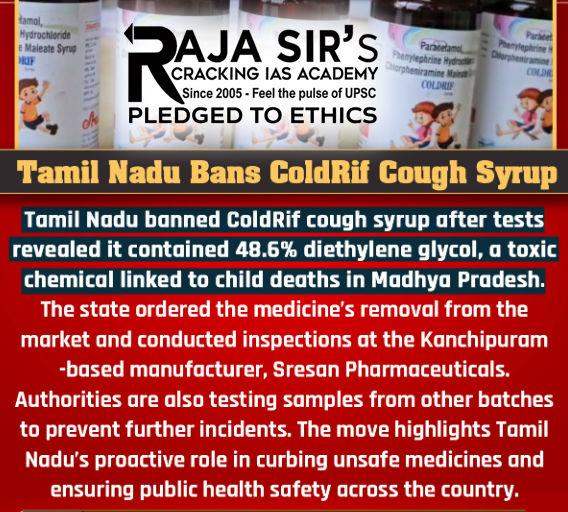
The diethylene glycol (DEG) issue has resurfaced in India with alarming consequences, particularly involving the cough syrup brand Coldrif, manufactured by Sresan Pharma in Tamil Nadu. Here''s a breakdown of the situation:
- Contamination Discovery: A batch of Coldrif cough syrup was found to contain diethylene glycol beyond permissible limits during testing at the Tamil Nadu manufacturing site.
- Fatalities: The contaminated syrup has been linked to the deaths of at least 16 children in Madhya Pradesh and 2 in Rajasthan due to acute kidney failure.
- Nationwide Response: The Central Drugs Standard Control Organisation (CDSCO) launched inspections at 19 drug manufacturing units across six states to uncover lapses in quality control.
Diethylene Glycol
Diethylene Glycol (DEG) is a colorless, odorless, syrupy organic chemical compound (formula: C₄H₁₀O₃). It is a synthetic industrial solvent, belonging to the glycol family, and is not approved for pharmaceutical or food use. Chemically, DEG is a by-product of ethylene oxide hydrolysis, often used where water-miscible, low-volatility liquids are required.
- Industrial Use: DEG is a toxic solvent used in antifreeze, brake fluids, and paints. It has no place in pharmaceuticals.
|
· Antifreeze and Coolants: Used as a de-icing and coolant agent in automobile and aircraft industries. · Paints and Plastics: Acts as a solvent in paints, plasticizers, resins, and polyurethane foams. · Brake Fluids and Lubricants: Used to maintain fluid stability in hydraulic and brake systems. Pharmaceutical contamination occurs when industrial-grade DEG is mistakenly or fraudulently substituted for pharmaceutical-grade glycerine or propylene glycol during drug formulation — often due to poor quality control or cost-cutting. |
- How It Gets In: Contamination often occurs when cheaper, industrial-grade glycerine or propylene glycol is used instead of pharmaceutical-grade materials.
- Health Impact: Ingestion can cause nausea, vomiting, reduced urination, seizures, acute kidney failure, and death—especially in children.
Global Context
- Past Tragedies: Similar DEG contamination incidents have occurred in The Gambia (2022), Uzbekistan (2023), and other countries, leading to hundreds of child deaths.
- WHO Action: The World Health Organization has issued alerts and developed new testing protocols to detect DEG and ethylene glycol in medicines.
Accountability & Fallout
- Doctor Arrests: In Madhya Pradesh, a doctor who prescribed the syrup was arrested, sparking protests from medical professionals who argue that manufacturers and regulators should be held accountable.
- Regulatory Crackdown: Authorities are now focusing on raw material sourcing, manufacturing practices, and supplier traceability.
Schedule M Norms
- Schedule M is a section of the Drugs and Cosmetics Act, 1940, prescribing Good Manufacturing Practices (GMP) for pharmaceutical products in India.
- It defines the minimum requirements for facilities, equipment, quality systems, documentation, and personnel to ensure safe, effective, and consistent drug production.
- Origin: Introduced under the Drugs and Cosmetics Rules, 1945, to regulate drug manufacturing quality across India.
- Earlier Framework: Focused mainly on facility hygiene and record-keeping, with limited emphasis on process validation or data integrity.
- Recent Revision (2023–24): The revised Schedule M brings Indian GMP norms in alignment with WHO-GMP and PIC/S standards, strengthening India’s position as a global pharmaceutical hub.
- Implementation Deadline: All units must achieve compliance by December 31, 2025.
Features of Revised Schedule M
- Pharmaceutical Quality System (PQS): Mandatory adoption of a structured quality and risk management framework across all manufacturing stages.
- Quality Risk Management (QRM): Identification and mitigation of product risks through scientific and evidence-based evaluation.
- Data Integrity – ALCOA+ Principles: All records must be Attributable, Legible, Contemporaneous, Original, Accurate, Complete, Consistent, Enduring, and Available.
- Pharmacovigilance System: Compulsory reporting and tracking of adverse drug events to ensure post-market surveillance.
- Equipment & Process Validation: Lifecycle-based validation (Design, Installation, Operation, Performance Qualification).
- Supply Chain & Vendor Traceability: Complete raw material traceability with supplier audits and digital monitoring systems.
- Infrastructure Modernisation: Requirement for computerised storage systems, controlled environments, and regular self-inspections.
 Ethical Concerns
The diethylene glycol (DEG) contamination crisis in India raises serious ethical concerns across multiple dimensions of the pharmaceutical ecosystem. Here''s a breakdown of the key ethical issues:
Corporate Negligence
- Use of Industrial-Grade Solvents: Some manufacturers substituted pharmaceutical-grade propylene glycol with cheaper industrial-grade alternatives containing DEG, prioritizing cost over safety.
- Lack of Testing and Quality Control: Failure to rigorously test raw materials and final products violates ethical obligations to ensure consumer safety.
Regulatory Oversight Failures
- Inadequate Monitoring: Despite past incidents, regulatory bodies failed to enforce strict compliance with Schedule M and other safety standards.
- Delayed Action: Authorities often act reactively—only after fatalities occur—rather than proactively preventing such tragedies.
Medical Ethics and Prescribing Practices
- Overprescription of Cough Syrups: Doctors frequently prescribe cough syrups unnecessarily, especially to children, despite global guidelines advising against it for those under four.
- Blame Shifting: Arresting doctors for prescribing contaminated products raises questions about scapegoating frontline professionals instead of holding manufacturers accountable.
Justice and Accountability
- Criminal Liability: The manufacturer, Sresan Pharma, faces charges including culpable homicide and drug adulteration. Ethical justice demands transparent investigations and fair trials.
- Victim Compensation: While ex-gratia payments have been announced, long-term support for affected families and survivors is ethically necessary.
Global Reputation and Responsibility
- Export Ethics: Indian pharmaceutical companies have been linked to DEG-related deaths in The Gambia, Uzbekistan, and now domestically. This undermines trust in India''s drug exports and raises global ethical concerns.
- WHO Warnings Ignored: Despite repeated alerts, lapses continue, suggesting a disregard for international safety norms.
This tragedy is not just a failure of systems—it’s a failure of ethics.