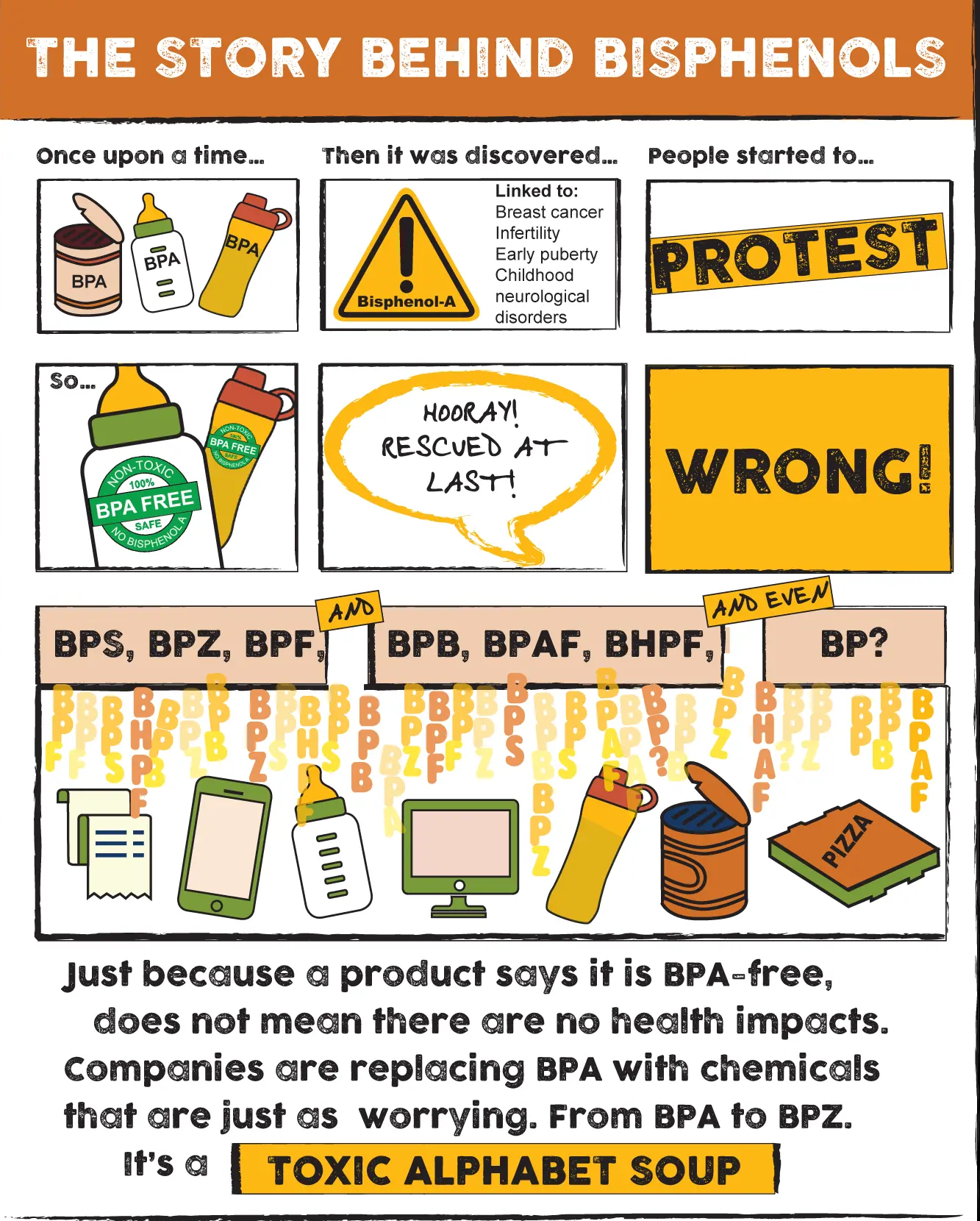



What is Bisphenol A?. Why is it a major cause of concern?.
BPA stands for bisphenol A, an industrial chemical that has been used to make certain plastics and resins since the 1950s. BPA is found in polycarbonate plastics and epoxy resins. Polycarbonate plastics are often used in containers that store food and beverages, such as water bottles. They may also be used in other consumer goods. Epoxy resins are used to coat the inside of metal products, such as food cans, bottle tops and water supply lines. Some dental sealants and composites also may contain BPA.
Effect of BPA
- BPA may affect several aspects of male and female fertility. As a phytoestrogen, or a plant-based compound that mimics estrogen, it may act on estrogen receptors in both males and females to promote inflammation or cause damage to the cells through a process called oxidative stress.
- Exposure to BPA is a concern because of the possible health effects on the brain and prostate gland of fetuses, infants and children. It can also affect children''s behavior.
- Additional research suggests a possible link between BPA and increased blood pressure, type 2 diabetes and cardiovascular disease.
- It is an an endocrine disruptor. In a concept known as “precocious maturation,” BPA exposure appears to prematurely age the female reproductive system, causing hormone changes and diminished fertility.
- BPA may also cause stress to our body by damaging the mitochondria (the energy factories in each of our cells). Stress can lead to chronic inflammation, an immune response that can alter the way our body regulates your weight, appetite, and hormone levels.
- BPA exposure has been linked to the development of certain cancers, including ovarian cancer, breast cancer, prostate cancer, and colon cancer.
However, based on certain studies it is said that BPA is safe at the very low levels that occur in some foods.
How to reduce exposure to BPA?
- Use BPA-free products. Manufacturers are creating more and more BPA-free products. Look for products labeled as BPA-free. If a product isn''t labeled, keep in mind that some, but not all, plastics marked with recycle code 3 or 7 may contain BPA.
- Avoid heat. Don''t put plastic containers in the microwave or dishwasher, because the heat may break them down over time and allow BPA to leach into foods.
- Focus on fresh whole foods. When you can, choose fresh whole fruits and vegetables.
- Use alternatives. Use glass, porcelain or stainless-steel containers for hot foods and liquids instead of plastic containers.
UPSC CIVIL SERVICES EXAM - PREVIOUS YEAR QUESTIONS
1. Bisphenol A (BPA), a cause of concern, is a structural/key component in the manufacture of which of the following kinds of plastics? (2021 PRELIMS)
(a) Low-density polyethylene
(b) Polycarbonate
(c) Polyethylene terephthalate
(d) Polyvinyl Chloride
Answer: (b)
2. What is Bisphenol A (BPA)? (2008 PRELIMS)
(a) A medical test for detecting cancer
(b) A test for testing the use of drugs to improve performance by athletes
(c) A chemical used for the development of food packaging materials
(d) A special type of alloy steel
Answer: (c)
3. With reference to polyethylene terephthalate, the use of which is so widespread in our daily lives, consider the following statements:
1. Its fibres can be blended with wool and cotton fibres to reinforce their properties.
2. Containers made of it can be used to store any alcoholic beverage.
3. Bottles made of it can be recycled into other products.
4. Articles made of it can be easily disposed of by incineration without causing greenhouse gas emissions.
Which of the statements given above are correct?. (2022 PRELIMS)
(a) 1 and 3
(b) 2 and 4
(c) 1 and 4
(d) 2 and 3
Answer: (a)
Explanation:
Polyethylene terephthalate (PET or PETE) is a strong, stiff synthetic fibre and resin and a member of the polyester family of polymers. PET is spun into fibres for permanent-press fabrics and blow-molded into disposable beverage bottles.
Statement 1 is correct: PET fibres make them highly resistant to deformation, so they impart excellent resistance to wrinkling in fabrics. They are often used in durable-press blends with other fibres such as rayon, wool, and cotton, reinforcing the inherent properties of those fibres while contributing to the ability of the fabric to recover from wrinkling.
Statement 2 is incorrect: Maharashtra government has announced the ban on sale of alcohol in PET bottles from April 1. Plastic packaging is dangerous to human health and the country liquor and country made foreign liquor cannot be sold in such bottles. PET has become widely used in carbonated-beverage bottles and in jars for food processed at low temperatures. The low softening temperature of PET—approximately 70 °C (160 °F)—prevents it from being used as a container for hot foods.
Statement 3 is correct: Polyethylene terephthalate is the most widely recycled plastic. For instance, PET bottles and containers are commonly melted down and spun into fibres for fibrefill or carpets.
Statement 4 is incorrect: Polyethylene, like other plastics, is not inert and is known to release additives and other degradation products into the environment throughout its lifetime. For example, the additive bisphenol-A used in the manufacture of many plastic products is leached as plastics age, and hydrocarbon gases are produced during high-temperature decomposition (>202°C).