



5GB1C & Inclusive Conservation Initiative (ICI) - PPP 100 - PRELIMS 2024 - 10
1. Methylotuvimicrobium buryatense 5GB1C
- The bacterial strain Methylotuvimicrobium buryatense 5GB1C consumes methane, a potent greenhouse gas.
- Methane is over 85 times more potent than carbon dioxide (CO2) in terms of its global warming potential on a 20-year timescale.
- It is responsible for nearly 30% of total global warming.
Reduction of Atmospheric Methane
- Large-scale harnessing of this bacteria can prevent 240 million tonnes of methane from reaching the atmosphere by 2050.
- The study suggests that the global average temperature rise can be reduced by 0.21-0.22 degrees Celsius through methane removal.
Methanotroph Selection
- Methane-eating bacteria (methanotrophs) are effective, but they grow optimally at methane concentrations around 5,000-10,000 ppm.
- Researchers screened methanotrophs to find strains that effectively consume low methane levels, around 500 ppm.
- Methylotuvimicrobium buryatense 5GB1C demonstrated the best performance at 500 ppm and even grew well at 200 ppm.
|
Methanogens and methanotrophs are microbes that interact with methane, but in different ways. Methanogens are microorganisms that produce methane as a byproduct of their metabolism in anaerobic environments, while methanotrophs are microbes capable of consuming methane as their energy source in aerobic or oxygen-rich environments. The CO2 cycle and the methane cycle are different processes within the global carbon cycle. The CO2 cycle primarily involves the exchange of carbon dioxide (CO2) between living organisms, the atmosphere, and the oceans through processes like photosynthesis, respiration, and carbonate reactions. On the other hand, the methane cycle involves the production and consumption of methane (CH4) by various biological and geological processes, including methanogenesis, methanotrophy, and methane oxidation, among others. Methanogens vs Methanotrophs |
|
|
Methanogens are microorganisms that are capable of generating methane from organic sources. |
Methanotrophs or Methanophiles are microorganisms which are capable of utilizing methane as a source of carbon and energy. |
|
Methanogens are obligatory anaerobic (Methanogenesis takes place under anaerobic conditions). |
Methanotrophs are aerobic (Methane digestion takes place under aerobic conditions). |
|
Precursors of methanogenesis are hydrogen, carbon dioxide and C-1 compounds. |
Methane is the precursor of methanotroph reactions. |
|
Methane is the end product of methanogenesis. |
Carbon dioxide and energy are produced during the methane utilization. |
|
Methanogens are used in waste water purification plants in anaerobic digesters and sludge treatment systems, and in bio gas production plants. |
Methanotrophs are used in degrading methane based products and methane emissions in industrial reactions. |
Biomass Production and Utilization
- The bacteria produce biomass after consuming methane, which can be used as feed in aquaculture.
- For every tonne of methane consumed, the bacteria can generate 0.78 tonne biomass dry-weight methane, valued at $1,600 per tonne.
Implementation Strategies
- Proposed strategies include designing biofilters containing nutrients for microorganism growth.
- Genetic modifications can induce desired characteristics in the bacterial strain.
Impact and Feasibility
- Preventing 240 million tonnes of methane emissions could significantly impact global warming.
- Challenges include controlling temperature, as bacterial growth requires specific temperature ranges.
- Economic feasibility and energy balance are crucial considerations when scaling the technology.
Future Directions
- Field studies are needed to test the technology''s feasibility.
- Analyzing the environmental life cycle and techno-economics is necessary to ensure economic viability and environmental benefits.
|
What is Methane?.
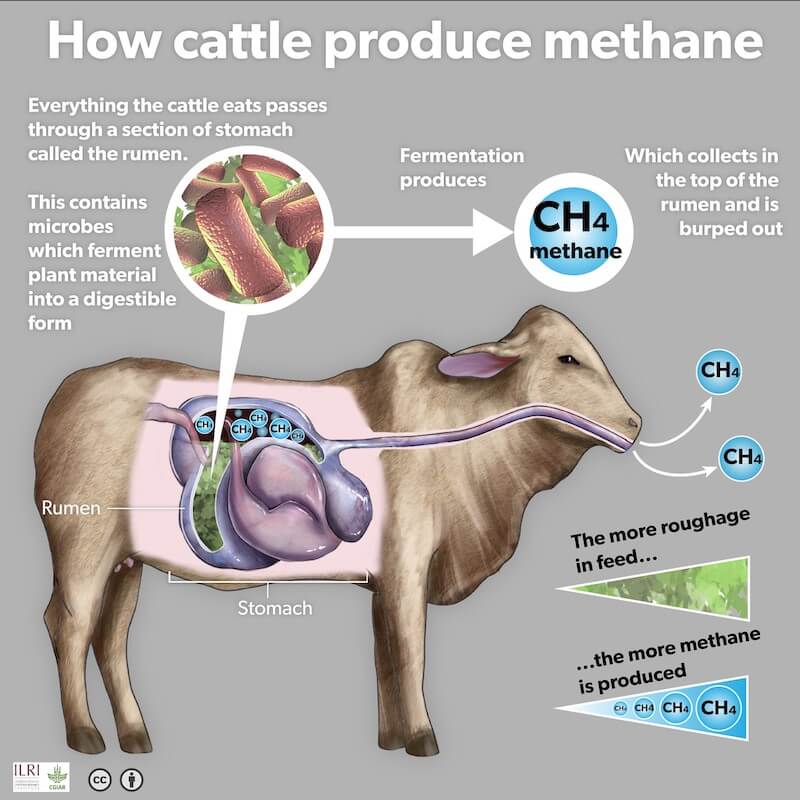
Methane release in ruminants
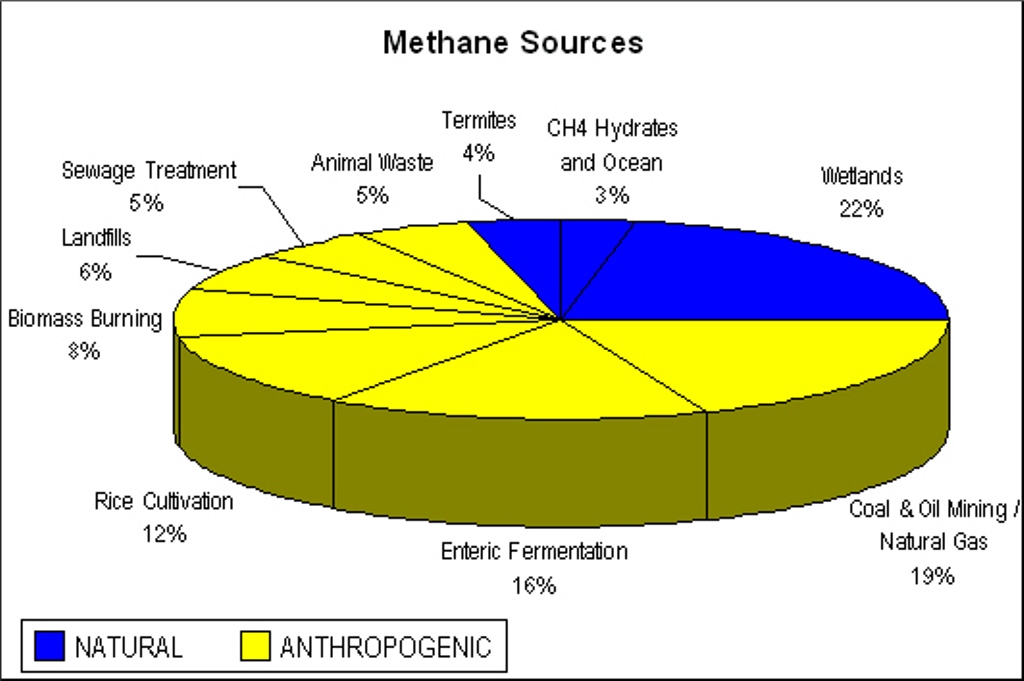
Other Sources of Methane
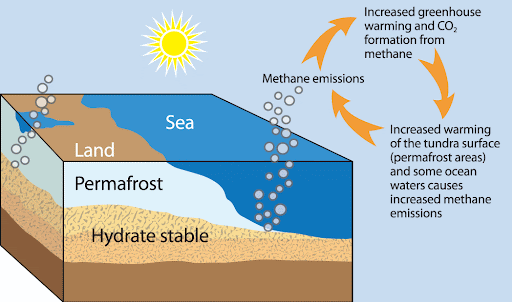
How does Methane Emissions affect the Environment?
How much methane can we really cut?
UNEP is at the front in support of the Paris Agreement goal of keeping the global temperature rise well below 2°C and aiming - to be safe - for 1.5°C, compared to pre-industrial levels. To do this, UNEP has developed a Six-Sector Solution roadmap to reducing emissions across sectors in line with the Paris Agreement commitments and in pursuit of climate stability. The six sectors are Energy; Industry; Agriculture and Food; Forests and Land Use; Transport, and Buildings and Cities. Global Methane Pledge
Significance
Why is dealing with methane crucial for climate change?
India Refused to Sign The Methane Pledge
In India, methane emissions are survival emissions
Agriculture is not included in India''s emission intensity target
Indian cattle contribute little to global methane emissions
Methane Pledge Outside of the UNFCCC and the Paris Agreement
Indian Efforts to Reduce Methane Emissions
|
 Emission by India
2. Inclusive Conservation Initiative (ICI)
- The International Day of the World''s Indigenous Peoples is observed on 9 August each year to raise awareness and protect the rights of the world''s indigenous population.
- This event recognizes the achievements and contributions that indigenous people make to improve world issues such as environmental protection.
Inclusive Conservation Initiative (ICI)
- It aims to support indigenous peoples and local communities in their continuing efforts to safeguard Earth’s natural ecosystems, recognizing their historical roles in nature conservation.
- It works inclusively with IPs and LCs, their regional and local organizations, governments, NGOs, civil society and others to strengthen the conservation of globally significant biodiversity and ecosystems.
Key highlights of the report:
- There are evidences on the potential of Indigenous Peoples and local communities in improving conservation, in total, donors have directed less than 1% of climate change mitigation and adaptation funding to IPs and LCs.
- The world seeks to realise the rights and priorities of IPs and LCs, significant scaling is needed.
- Indigenous Peoples own or manage an estimated 25% of the world’s land surface, including 40% of terrestrial protected areas and 37% of ecologically intact landscapes.
- Only 7% of $1.7 billion in pledged funding is going directly to Indigenous groups.
- IPs and LCs are severely impacted by climate change and environmental degradation.
- They have advocated for loss and damage funding but have had few opportunities to engage with decision-makers.
- Local efforts are the central source of conservation funding, in Latin America, for example, although national and local non-governmental organisations (NGO) implement 26% of disbursements, 41% of all funding are ascribed to Indigenous Peoples’ organisations.
Suggestions:
- The leadership of Indigenous communities is required to reach global goals on marine and landscape protection.
- The ICI should encourage other funders and governments to adopt more inclusive approaches.
- A Global Biological Framework Fund (GBFF) will be launched in the upcoming 7th Global Environment Facility (GEF) Assembly in Vancouver, Canada.
Subsidiary Bodies 58 (SB 58) conference:
- It was held in Bonn, Germany.
- Indigenous Peoples’ groups from around the world, including India, called for representation on the Transitional Committee (TC) for the establishment of a Loss and Damage Fund (LDF).
- The committee is composed of 24 members.
- 10 members are from developed countries and 14 are from developing countries.
- They want representation so that their views on losses and damages can be taken into account by the TC in the recommendations for the full operationalisation of LDF.
Indigenous-led Initiatives
- Inclusive Conservation Initiatives (ICIs) represent a critical advancement for Indigenous Peoples (IPs) and Local Communities (LCs), aiming to preserve and enhance their stewardship over approximately 7.6 million hectares of landscapes and seascapes. These areas are rich in biodiversity and host irreplaceable ecosystems.
- ICIs are operational in nine geographical areas within 12 countries, working in conjunction with partners to oversee high-biodiversity lands traditionally governed by IPs and LCs. These lands may or may not have formal legal recognition.
- The territories governed by ICIs are diverse, encompassing large tracts of tropical forests, mountainous areas, temperate and boreal forests, drylands and grasslands, and marine and coastal ecosystems.
- ICIs acknowledge and continue the historical role of Indigenous Peoples and Local Communities in protecting natural ecosystems.
- To bolster these efforts, ICIs are providing direct financial aid to 10 Indigenous and locally led initiatives in Africa, Central and South America, and Asia and the Pacific.
Why Inclusive Conservation Matters?
- Indigenous peoples are custodians of approximately 25% of the Earth’s land surface, which encompasses 40% of terrestrial protected areas and 37% of ecologically intact landscapes.
- Indigenous peoples and local communities currently oversee more than one-third of the world’s remaining irrecoverable carbon. This highlights their crucial role in managing this valuable resource.
- Research suggests a strong correlation between linguistic and biological diversity in biodiversity hotspots and high biodiversity wilderness areas.
- Lands and waters overseen by Indigenous Peoples and Local Communities help preserve biodiversity and aid in carbon sequestration.
- This stewardship also supports local livelihoods, sustains cultures, and protects valuable traditional knowledge. This knowledge is key for maintaining local ecosystems and contributing to global environmental benefits.
- A study was conducted in 14 countries rich in forests. The study found that areas inhabited by Indigenous Peoples and Local Communities have less deforestation and subsequently, lower carbon emissions.
- These areas have been recognized and protected by their governments. This protection plays a vital role in reducing deforestation and limiting the impacts of climate change.
- Research shows that Indigenous people’s ways of managing land often reduce deforestation as much as, or more than, protected areas managed by the state.
- The Global Assessment by the Intergovernmental Science-Policy Platform on Biodiversity and Ecosystem Services (IPBES) points out that Indigenous Peoples (IPs) and Local Communities (LCs) often have better local knowledge about biodiversity and environmental changes than scientists.
- This assessment also recognized the important contributions of men and women in IPs and LCs to biodiversity conservation at different levels.
- The latest report from the Intergovernmental Panel on Climate Change (IPCC) underlines that including groups like women and IPs and LCs improves decision-making about climate.
- Indigenous Peoples (IPs) and Local Communities (LCs) have knowledge and skills valuable for managing natural resources.
- IPs and LCs are facing increasing harassment and violence while trying to protect their lands and environments.
Decision-making processes at national, regional, and global levels often fail to incorporate the full participation of IPs and LCs. This exclusion leads to decisions and programs that do not consider IPs and LCs’ perspectives or priorities, undermining their conservation capabilities. - Funding to IPs and LCs is insufficient. Most project executions are done by globally accredited institutions, while projects led significantly by Indigenous peoples are a minority.
- The Inclusive Conservation Initiative (ICI) aims to inspire other funders and governments by demonstrating that traditional approaches can be modified to include IP and LC leadership, innovation, and governance.
- ICI offers both practical and global experience, supporting IPs and LCs in crafting and demonstrating an inclusive conservation model. This helps the world envision conservation in a new way.
Global Environment Facility (GEF)
The Global Environment Facility (GEF) is an international organization that was created in 1992, right before the Rio Earth Summit. Its purpose is to act as an environmental catalyst, making strategic investments with partners to address the most pressing environmental issues worldwide.
The GEF stands out due to its unique partnership model encompassing 18 agencies. These consist of United Nations agencies, multilateral development banks, national entities, and international NGOs, working collectively with 183 countries.
It has established a broad network with civil society organizations and maintains a close working relationship with the global private sector. In addition, it benefits from the ongoing insights of an independent evaluation office and a top-tier scientific panel.
The GEF serves as a financial conduit for five key international environmental conventions: the Minamata Convention on Mercury, the Stockholm Convention on Persistent Organic Pollutants (POPs), the United Nations Convention on Biological Diversity (UNCBD), the United Nations Convention to Combat Desertification (UNCCD), and the United Nations Framework Convention on Climate Change (UNFCCC).