



Aflatoxins
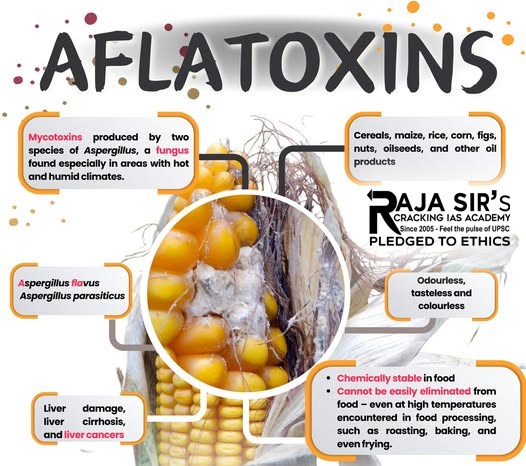
Aflatoxins are a group of highly toxic and carcinogenic compounds produced by certain molds, primarily Aspergillus flavus and Aspergillus parasiticus. These molds thrive in warm, humid environments and commonly contaminate food crops such as maize, peanuts, cottonseed, and tree nuts. Aflatoxins are among the most intensively studied mycotoxins due to their severe health impacts and economic consequences.
Types
There are over 18 known aflatoxins, but the most prevalent and dangerous are:
- Aflatoxin B1: The most toxic and carcinogenic.
- Aflatoxin B2
- Aflatoxin G1
- Aflatoxin G2
These compounds are chemically stable and can survive food processing, making them persistent contaminants.
Sources of Contamination
Aflatoxins contaminate crops during both pre- and post-harvest stages. Key factors include:
- Poor storage conditions (high humidity and temperature)
- Insect damage
- Fungal infection during growth or drying
Contaminated feed can also pass aflatoxins into animal products like milk, meat, and eggs.
Health Impacts
Aflatoxins pose serious health risks:
- Acute toxicity: Liver damage and aflatoxicosis
- Chronic exposure: Liver cancer (hepatocellular carcinoma), immune suppression, stunted growth in children
- Carcinogenicity: Aflatoxin B1 is classified as a Group 1 carcinogen by the International Agency for Research on Cancer (IARC).
Prevention and Control
Effective strategies include:
- Biocontrol: Using atoxigenic strains of Aspergillus to outcompete toxigenic ones
- Improved storage: Drying crops properly and storing in low-humidity environments
- Regulations: Many countries enforce strict aflatoxin limits (2–20 ppb) in food and feed.
Economic Impact
Aflatoxin contamination leads to:
- Crop losses
- Trade restrictions
- Increased healthcare costs
The FAO estimates that up to 25% of global food crops are affected by mycotoxins annually.
Aflatoxins represent a major challenge to global food safety and public health. Continued research, improved agricultural practices, and stringent regulations are essential to mitigate their impact. Awareness and education are key to preventing aflatoxin-related diseases and ensuring a safer food supply.