



Delimitation Process
Delimitation Process
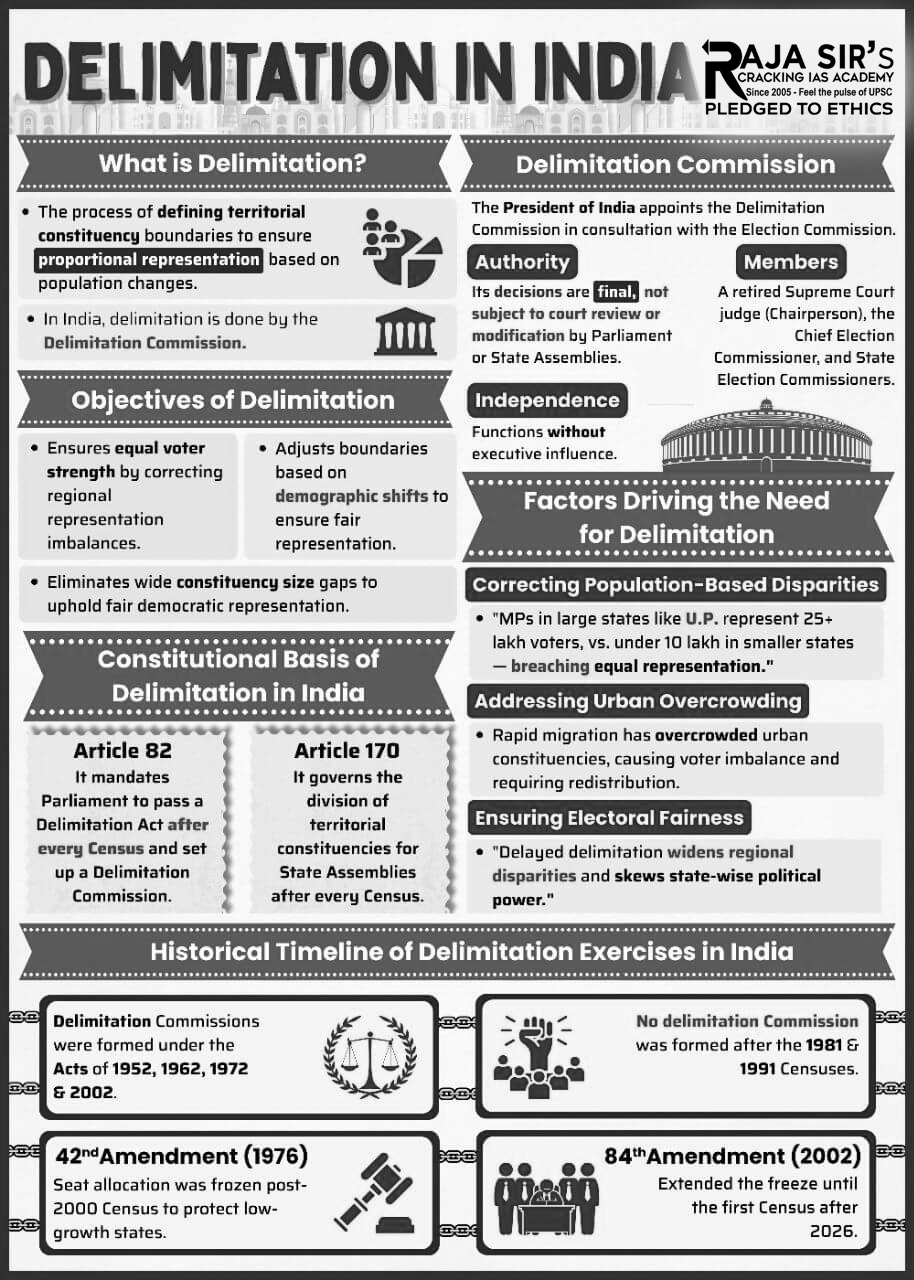
- Delimitation refers to the process of fixing boundaries of territorial constituencies in a country to ensure proportionate representation based on population changes. In India, this exercise is carried out by an independent and high-powered body known as the Delimitation Commission or Boundary Commission.
Objectives of Delimitation
- Equal Representation: Ensures uniform voter strength by correcting imbalances in overrepresented and underrepresented regions.
- Electoral Integrity: Adjusts constituency boundaries in line with demographic shifts, ensuring fair and accurate representation.
- Preventing Malapportionment: Eliminates significant variations in constituency sizes, preserving the fairness of democratic representation.
|
Constitutional Basis of Delimitation in India
Composition of the Delimitation Commission
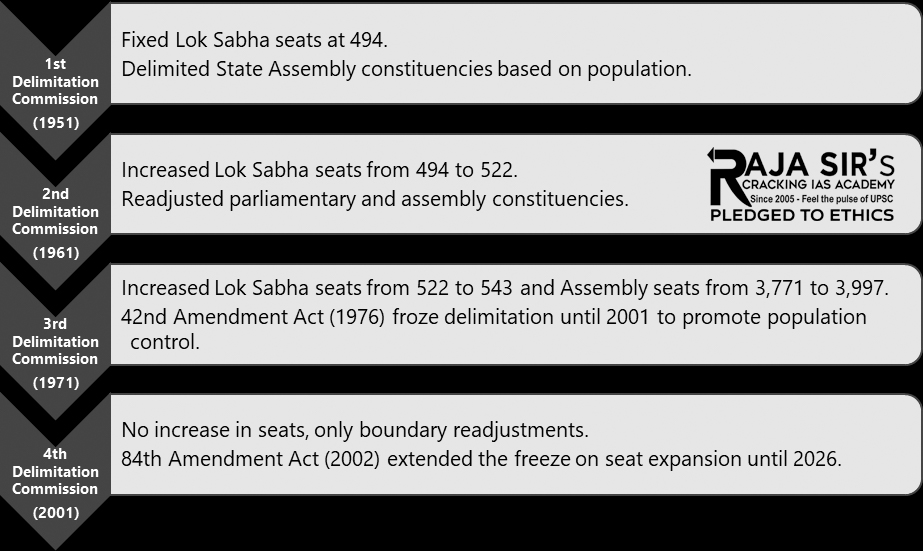
Historical Timeline of Delimitation Exercises in India
|
Factors Driving the Need for Delimitation
- Correcting Population-Based Disparities: Large states like the U.P. have MPs representing over 25 lakh voters, while smaller states have constituencies with less than 10 lakh voters, violating the principle of equal representation.
- Addressing Urban Overcrowding: Rapid migration has led to overpopulated urban constituencies, creating an imbalance in voter representation and necessitating redistribution.
- Recognizing Demographic Shifts: States with high population growth like Uttar Pradesh and Bihar are underrepresented, while low-growth states like Kerala & Tamil Nadu fear a loss of political influence.
- Ensuring Electoral Fairness: Delayed delimitation risks widening regional disparities, making certain states disproportionately powerful in governance and policy decisions.
Challenges in Conducting Delimitation in India
- Federal Imbalance: States with lower population growth (South) may lose seats, while high-population states (North) may gain, affecting political equilibrium.
- Impact on Regional Parties: State-based parties may see reduced representation, weakening regional voices in national policymaking.
- Redrawing of Reserved Seats: Changes in demographic patterns may alter SC/ST constituencies, affecting political representation.
- Delay in Women’s Reservation: The Women’s Reservation Act is linked to delimitation, which may delay its implementation.
- Political and Legal Challenges: Resistance from affected states & legal disputes could hinder smooth execution.
|
Concerns of Southern States
|
Way Forward
- Expanding Lok Sabha strength: Increase the total number of seats instead of redistributing existing ones to prevent penalising states with successful population control.
- Weighted representation: Introduce a formula that balances population size with governance performance to ensure fairness.
- Strengthening Rajya Sabha’s role: Enhance upper house representation for low-population-growth states to maintain federal balance.
- Phased implementation: Implement changes gradually to avoid political instability and ensure a smooth transition.
Posted on 07-05-2025 • By Admin