Food Adulteration has been defined comprehensively under the Prevention of Food Adulteration Act, 1954. As per the act, food is adulterated if
- Any low-grade or inexpensive substance that has been replaced wholly or partly in the article making its nature, substance, or quality injurious;
- It contains any other substance which disturbs or is so processed as nature, substance or quality will have injurious effect;
- Any essential component of the article that has been wholly or partly distracted so as to affect injuriously nature, substance, or quality.
According to the Prevention of Food Adulteration Act, 1954 the food articles containing some ingredients in excess of the prescribed amount which is not hazardous for consumption will not be considered adulterated.
Most common adulterants
| Food Products |
Adulterant |
Harmful Effects |
| Milk and Curd |
Water and starch powder. |
Stomach disorders. |
| Ghee, Cheese and Butter |
Mashed potatoes, Vanaspati and starch powder. |
Gastro-intestinal disturbances and other stomach disorders. |
| Grains |
Dust, Pebbles, Stones, Straw, weed seeds, damaged grain, etc. |
Liver disorders, Toxicity in the body, etc. |
| Pulses |
Dyes, chemical and Lead Chromate. |
Stomach disorders. |
| Coffee powder |
Chicory, tamarind seeds powder. |
Diarrhoea. |
| Tea |
Artificial colouring agents. |
Liver disorders. |
| Sugar |
Chalk powder, Washing soda, Urea, etc. |
Stomach disorders and kidney failure. |
| Pepper |
Dried papaya seeds and blackberries. |
Severe allergic reactions including stomach and skin irritations. |
| Mustard seeds |
Argemone seeds. |
Abdominal contractions, sluggishness and increased excretion. |
| Edible Oils |
Mineral oil, Karanja oil, castor oil and artificial colours. |
Gallbladder cancer, allergies, paralysis, cardiac arrest, and increased LDL cholesterol. |
| Turmeric Powder |
Pesticide residues, sawdust, chalk dust, industrial dyes, metanil yellow dye arsenic, lead metal etc. |
Cancer and Stomach disorders. |
| Chilli and Coriander powder |
Redbrick powder, Rhodamine B dye, Red lead, dung powder, soluble salts, water-soluble synthetic colours and other common salts. |
Metal toxicity, Cancer, lead poisoning, tumour, variations in blood pressure and other stomach related disorders. |
| Cinnamon sticks |
Cassia bark. |
Liver Damage, Low Blood Sugar, Mouth Sores and increased risk of cancer. |
| Cumin seeds |
Coloured grass seeds, sawdust and charcoal dust |
Stomach disorders. |
| Jam, Juice and Candies |
Non-permitted dyes including metanil yellow and other artificial food dyes. |
These dyes are highly carcinogenic that have the potential to cause different types of cancer. |
| Jaggery |
Washing soda, chalk powder |
Vomiting and other Stomach disorders |
| Honey |
Molasses, dextrose, sugar and corn syrups |
Stomach disorders |
| Fruits and Vegetables |
Chemical dyes, Malachite green, calcium carbide, copper sulphate and oxytocin saccharin wax. |
Stomach disorders, vomiting, and dyes used are highly carcinogenic. |
| Tomato sauces |
Pumpkin pulp, non-edible artificial colours and flavours. |
Gastritis and inflammation of vital organs. |
| Ice Cream |
Pepper oil, ethyl acetate, butyraldehyde, nitrate, washing powder. The kind of gum is added which is prepared by boiling different animal parts including the tail, udder, nose, etc. |
Dreadful diseases that affect organs including lungs, kidneys, and heart. |
1. Milk
A 2012 study conducted by the FSSAI across 33 states found that milk in India was adulterated with diluted water, detergent, fat and even urea.
Some of the adulterants that are used in milk are water, chalk, urea, caustic soda and skimmed milk, while Khoya is adulterated with paper, refined oil and skimmed milk powder.
The level of adulteration in milk is dangerous to so many levels and has the highest chance of causing stomach disorders.
2. Tea/Coffee
Tea and coffee are two most used beverages in India, and thus highly adulterated. Tea leaves are usually adulterated with same coloured leaves, some might not even be edible. Several cases of liver infection across the country have been reported due to consuming adulterated tea.
Coffee seeds, on the other hand are adulterated with tamarind seeds, mustard seeds and also chicori. These adulterants are the main cause of diarrhoea.
3. Wheat and other food grains
Everybody knows that wheat is very commonly adulterated with ergot, a fungus containing poisonous substances and is extremely injurious to health.
4. Vegetables
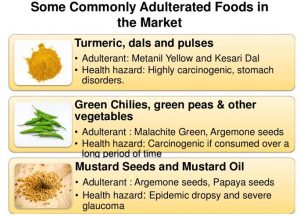
Beware of the shiny vegetables! Yes, adulteration of vegetables is in news for quite sometime now. Different coloured and textured vegetables are often coloured with different dyes and substances. These vegetables are mostly adulterated with malachite green, a chemical dye which is known to have carcinogenic.
Common adulterants in fruits and vegetables are oxytocin sachharin, wax, calcium carbide and copper sulphate.
 5. Sweets
According to Indian regulations, silver must be 99.9 per cent pure if it is used as a food ingredient.
However, with silver becoming expensive many sweet shop owners use silver vark that could contain aluminium. The most common ingredients in making these sweets are khoya and chenna and they''re often adulterated with starch. But the good news is that you can test if the sweets are adulterated by boiling a small sample in water, cool it then add a few drops of iodine solution.
A blue color indicates the presence of starch. Also, sugar used in making thse sweets might be adulterated with tar dye which only makes it worse.
6. Honey
There are so many varieties of honey available in the market, but due to its steep price, honey is commonly adulterated with molasses sugar to increase the bottle quantity.
According to a study carried out by the Centre for Science and Environment, most honey brands being sold in the country contain varying amounts of antibiotics and their consumption over time could induce resistance to antibiotics, lead to blood-related disorders and injury to the liver.
7. Dal
The most commonly adulterated dal is arhar dal and is usually adulterated with metanil yellow. Metanil yellow is a principal non-permitted food colour used extensively in India. The effect of long-term consumption of metanil yellow on the developing and adult brain causes neurotoxicity.
Neurotoxicity occurs when the exposure to natural or artificial toxic substances, alters the normal activity of the nervous system in such a way as to cause damage to the nervous tissue.
Metanil yellow is used in dal as an adulterant for colouring. Its presence can be tested in dal by adding a few drops of HCl to a test sample, if the solution turns pink in colour, it indicates the presence of metanil yellow.
8. Spices
Recently, a major Indian supplier was caught and had to destroy tons of turmeric for dangerous adulteration using metanil yellow and red oxide of lead - the later being highly carcinogenic.
Soap stone or other earthy material and foreign resinare the common adulterant used in Asafoetida. Papaya seeds, black berries are the common adulterant used in black pepper as they are almost similar in size but tasteless (sometimes bitter). Red chilli powder is adulterated with brick powder,salt powder or talc powder and artificial colours like Sudan Red.
The most expensive spice in the world. Saffron is adulterated by coloured dried tendrils of maize cob.
9. Butter and cream
Butter can be diluted with water or partially replaced with cheaper plant oils such as palm oil, sunflower oil and soybean oil. This increases the profits derived from a given volume of milk.
10. Ice cream
Most common adulterants in ice cream are pepperonil, ethylacetate,butraldehyde, emil acetate, nitrate, washing powder etc are not less than poison. Pepperoil is used as a pesticide and ethyl acetate causes terribble diseases affecting lungs, kidneys and heart.
Ice cream is manufactured in extremely cold chamber where fat is hardened and several harmful substances are added. Also a kind of gum is added which is sticky and slow melting. This gum is obtained by boiling animal parts like tail,the nose,the udder etc.
|
Cases
- In 2014, Mother Dairy''s Deputy Manager was jailed for supplying adulterated milk products.
- The National Survey on Milk Adulteration 2011 found that eight per cent of milkin India was found to have detergents. Other contaminants like urea, starch, glucose and formalin, too, are used as adulterants.
- World: Cases of melamine contaminated milk products were found in China. The level of the toxic chemical melamine found in samples was up to 500 times the permitted limit.
- 1998, adulterated mustard oil poisoning resulted in the deaths of more than 60 in Delhi and 3000 people fell ill. It was found that white oil was mixed with edible mustard oil.
- In 2006 New Delhi Center for Science and Environment (CSE) reported that pesticide residues were found in Coca-Cola and PepsiCo brands. The pesticide content was found tobe 24 times higher than safety standards on aerated drinks developed by the Bureau of Indian Standards.
- KFC in India: KFC entered India in 1995 and has been in the midst of controversy since then. The regulatory authorities found that KFC''s chickens did not adhere to the Prevention of Food Adulteration Act, 1954. Chickens contained nearly three times more monosodium glutamate (popularly known as MSG, a flavour enhancing ingredient) as allowed by the Act. Since the late 1990s, KFC faced severe protests by People for Ethical Treatment of Animals (PETA), an animal rights protection organisation. PETA accused KFC of cruelty towards chickens and released a video showing the ill-treatment of birds in KFC''s poultry farms. However, undeterred by the protests by PETA and other animal rights organizations, KFC planned a massive expansion programme in India and it succeeded in doing so.
|
Laws against food adulteration in India
Food Safety and Standards Act, 2006 (FSS Act, 2006)
- In 2006, the government enacted the FSS Act, which repealed all other laws governing food quality in India at that time. The act empowered the central government to frame rules under the act to deal with several aspects with respect to the regulation of food safety.
- FSSAI: Act established the Food Safety and Standard Authority of India (FSSAI) to supervises and regulate food safety and standards. FSSAI is empowered to establish various other authorities like the Central Advisory Committee, Scientific Panels, and committees for consultation and opinions in the matters of food safety.
- Food Commissioners: The Act empowers the State Government to appoint a Commissioner of Food Safety for the State for effective implementation of the provisions at the State level.
- Food Safety officers: Food Commissioner is authorised to appoint Food Safety officers for each district.
- A food safety officer is the authorized person to inspect the safety and security of food that is being served in restaurants or street food stalls.
- In case the food inspected by an officer is not fresh or had got spoilt, the FSSAI officer has all the rights to stop the production of such food and issue a warning in writing to the organizer.
- Licensing: Act prohibits any person to operate any food business without a license from the designated officers.
- It provides for the punishment for the Import, manufacture, storage, sale or distribution of any food article which is adulterated and compensation to the victims.
- the Act also regulates the food products which can be imported.
Rules framed under the act
Following are some of the rules enacted by the government:
- Food Safety and Standards (Licensing and Registration of Food Businesses) Regulation, 2011.
- Food Safety and Standards (Packaging and Labelling) Regulation, 2011.
- Food Safety and Standards (Laboratory and Sampling Analysis) Regulation, 2011.
- Food Safety and Standards (Food Product Standards and Food Additives) Regulation, 2011.
Indian Penal Code, 1860
According to Section 272 and 273, food or drink adulteration or sale of such food or drink is an offense punishable with imprisonment which may extend to six months or fine or both.
DART
FSSAI has set up an online platform named DART (Detect Adulteration with Rapid Test) for checking the quality of various food articles like milk, dairy products, oils, grains, fruits, vegetables, sugar, beverages, etc.
Consumer Protection Act, 2019
The Act provides for punishment by a competent court for the manufacture or sale of adulterant/spurious goods. The court may, in case of the first conviction, suspend any license issued to the person for a period of up to two years, and in case of second or subsequent conviction, cancel the license permanently.
Causes of adulteration
Profit motive: Big and small business owners are adulterating the products to maximize their profits by reducing the cost of producing them. For ex; in the case of honey, producers have been allegedly using sugar syrup which is less costly compared to raw honey.
Lack of technology: India is lacking the technology to detect the adulteration of high levels, such as in the present case of adulteration in Honey, Indian tests could not be able to detect the adulteration in the samples provided by the big brands.
Lesser Punishment: Punishment for adulteration, which may cause grievous injury to the human system and cause the disease like cancer, is not stringent.
Increasing food demand: With the growth of the population together with their purchasing power, demand for food products is also increasing at a fast pace. To meet this increasing demand, adulteration becomes a common phenomenon.
Lack of manpower: FSSAI has cited a shortage of food safety officers and laboratories as reasons for increasing the production of unsafe food products.
Way forward
Public awareness
- The most important component for ensuring food safety is the people themselves. If people are aware of the on the spot quality assessment techniques of the products they might be able to avoid low-quality or harmful products.
- Thus, awareness must be spread on a wider scale among people for ensuring food safety through various social media platforms.
- One of the most potential post-purchase ways to check adulteration is by performing simple tests at homes. Consumers should also be aware of their rights and report the seller who has sold them adulterated food.
- People need to be very cautious when they buy products from stores and malls. They should check for standards like ISI standard mark, Agmark for quality products, FSSAI standard mark, date of packing and date of expiry, etc.
Increasing punishment
- One way of doing this is by hiking the penalty, including making it analogous to attempt to murder in some extreme cases of adulteration.
Testing
- Authentic testing of food and adulterant detection of various food products is required for value assessment.
- The government can set up more testing laboratories with acceptable charging fees, where the purity of food can be analyzed by sending a sample of food by the public.
FSSAI proposal
The government should consider the following amendments proposed by FSSAI to FSS act, 2006:
- In extreme cases like deaths due to adulteration, Punishment for a term which shall not be less than 7 years but which may extend to imprisonment for life and also fine which shall not be less than Rs. 10 lakh.
- Increasing the punishment for obstructing, impersonating, intimidating, and threatening, and assaulting a food safety officer to the imprisonment of not less than 6 months and up to two years, besides a penalty of up to Rs 5 lakh.
Food Adulteration is a grievous crime as it has the potential to cause a long term injury to the health of a person which not only hurt people physically but also economically and socially, it is the duty of the government to protect its citizens from the hidden enemies of the society, playing with the lives of people just for increasing their share of wealth in society. Thus, the provision of stringent punishment must be enacted for them.