



Naegleria fowleri: The Brain-Eating Amoeba
Naegleria fowleri: The Brain-Eating Amoeba
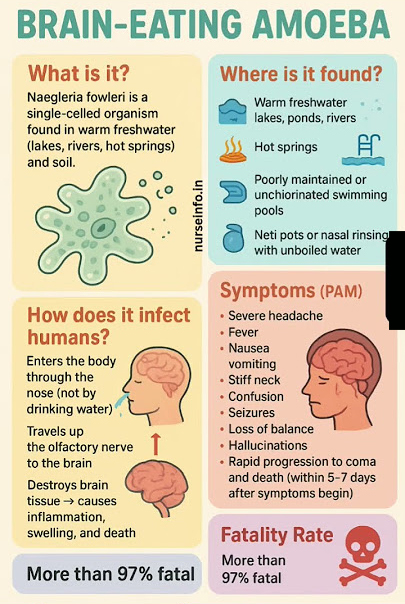
- Naegleria fowleri, commonly known as the "brain-eating amoeba," is a single-cell organism found in warm freshwater environments such as lakes, hot springs, and poorly maintained swimming pools.
- It is a microscopic organism that can only be seen with a microscope.
- The amoeba enters the body through the nose and can cause a severe brain infection known as primary amebic meningoencephalitis (PAM).
- Spread in the Human Body:
- The amoeba is typically acquired through the nasal passage and mouth when a person swims, dives, or uses contaminated water for religious rituals.
- It then migrates through the olfactory nerve to the brain, leading to severe inflammation and destruction of brain tissue.
- Naegleria fowleri infection does not spread from person to person.
|
§ Vermamoeba vermiformis is a free-living amoeba found in natural and man-made environments, including freshwater sources. § It can host various pathogens and is linked to opportunistic diseases such as encephalitis and epithelial disorders. |
- At-risk Individuals:
- While the human body is generally vulnerable to Naegleria fowleri, infections are extremely rare.
- Certain factors can increase vulnerability, such as a weakened immune system, a history of nasal or sinus issues, or activities involving exposure to warm freshwater.
- Symptoms and Prognosis:
- Symptoms usually appear within a week of infection and include severe headache, fever, nausea, vomiting, stiff neck, confusion, seizures, and hallucinations.
- The infection progresses rapidly and can lead to coma and death. The chances of survival are unfortunately low.
- Treatment:
- Treatment includes a combination of drugs.
- The drug Miltefosine has shown efficacy in killing Naegleria fowleri in laboratory settings and has been used successfully in the treatment of some survivors.
- Even with treatment, the chances of surviving Naegleria fowleri infection remain low with a recorded death rate of 97 per cent.
Posted on 20-08-2025 • By Admin