



What is the 'landfall' of a cyclone?
What is the 'landfall' of a cyclone?
- Landfall is the event of a tropical cyclone coming onto land after being over water.
- As per the IMD, a tropical cyclone is said to have made a landfall when the center of the storm – or its eye – moves over the coast.
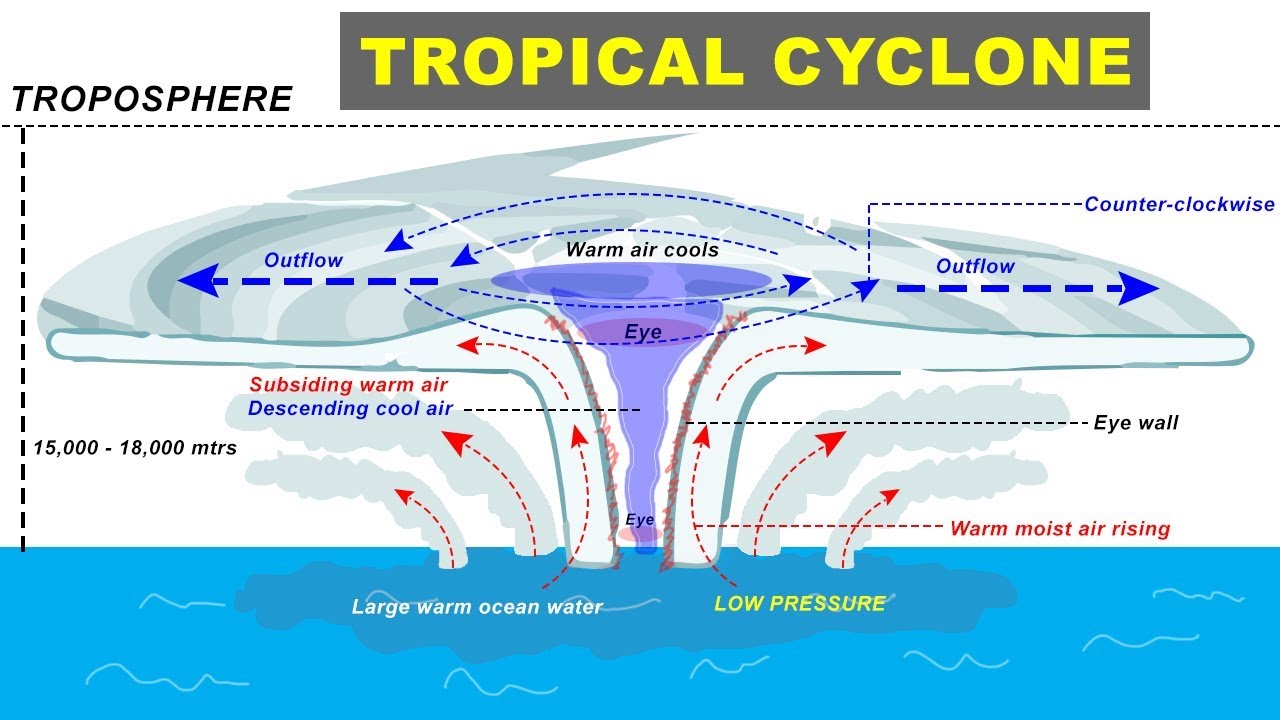
- The "eye" of a cyclone is a region of relatively calm weather found at the center of the storm.
- It is a circular or oval-shaped area characterized by light winds, clear or partly cloudy skies, and decreased precipitation.
- The size of the eye can vary significantly, ranging from a few kilometers to over 50 kilometers (30 miles) in diameter in larger cyclones.
- During landfall, the outer bands of the storm may have already reached the coast, bringing strong winds, heavy rain, and storm surge.
- Landfall marks the moment when the cyclone officially reaches the land.
- A landfall should not be confused with a ‘direct hit’, which refers to a situation where the core of high winds (or eyewall) comes onshore but the centre of the storm may stay remain offshore.
Damage caused
- The damage caused by the landfall will depend on the severity of the cyclone – marked by the speed of its winds.
- E.g., Cyclone Biparjoy, classified by the IMD as a “very severe cyclonic storm”, the impact may include extensive damage to kutcha houses, partial disruption of power and communication lines, minor disruption of rail and road traffic, etc.
Lasting time
- Landfalls can last for a few hours, with their exact duration depending on the speed of the winds and the size of the storm system.
- e.g., Cyclone Biparjoy’s land process is expected to last around five to six hours, with the cyclone almost completely dissipating over approximately the next 24 hours.
- Cyclones lose their intensity once they move over land because of sharp reduction of moisture supply and increase in surface friction.
- This means that while landfalls are often the most devastating moments of cyclones, they also mark the beginning of its end.
Management of cyclones
- The National Disaster Management Authority (NDMA) in India outlines several key components for the management of cyclones. These components include:
- Risk Assessment and Early Warning Systems
- Conducting risk assessments to identify vulnerable areas, populations, and infrastructure.
- Developing and maintaining robust early warning systems that provide timely and accurate information about approaching cyclones.
- Disseminating warnings and advisories through multiple channels to reach the affected communities and stakeholders.
- Preparedness and Planning
- Developing and regularly updating cyclone-specific disaster management plans at national, state, and local levels.
- Identifying and establishing cyclone shelters, evacuation routes, and assembly points in vulnerable areas.
- Stockpiling and pre-positioning essential emergency supplies such as food, water, medical provisions, and relief materials.
- Conducting regular drills, exercises etc.
- Mitigation measures
- Strict adherence to building Codes and Regulations in cyclone-prone areas
- Coastal Zone Management:
- Implementation of effective coastal zone management plans to regulate development activities along vulnerable coastlines.
- It also includes Mangrove Plantation, development of bio-shields, shelter belt plantation, coastal flood management etc.
- Infrastructure Development:
- Regular maintenance and strengthening of critical infrastructure such as roads, bridges, power lines, and communication networks.
- Response and Coordination
- Activating emergency response mechanisms at all levels of governance, including the National, State, and District Disaster Management Authorities.
- Coordinating with various stakeholders including NGOs
- Mobilizing resources, including manpower, equipment, and relief supplies, for rescue, evacuation, medical assistance, and other response operations.
- Establishing emergency operation centers and coordination cells to facilitate real-time information sharing and decision-making.
- Evacuation and Shelter Management
- Ensuring the availability and readiness of cyclone shelters and evacuation centres, equipped with basic amenities and facilities.
- Organizing systematic and orderly evacuations, prioritizing the safety and well-being of vulnerable groups such as the elderly, children, and people with disabilities.
- Recovery and Rehabilitation
- Undertaking post-cyclone damage assessments to ascertain the extent of destruction and prioritize recovery efforts.
- Providing immediate relief assistance to affected communities, including shelter, food, water, healthcare, and sanitation facilities.
- Implementing medium- and long-term rehabilitation and reconstruction plans to restore infrastructure, livelihoods, and community resilience.
- Promoting sustainable development practices and resilient infrastructure designs to minimize future vulnerability.
Steps taken by India
- National Cyclone Risk Mitigation Project (NCRMP):
- Launched by the MHA, this project aims to reduce the vulnerability of coastal communities and infrastructure to cyclones and storm surges.
- It focuses on capacity building, early warning systems, cyclone shelters, evacuation planning, and community awareness.
- IMD’s Colour Coding of Cyclones
- Four colours - Green, Yellow, Orange, and Red – are used by IMD to make people aware about the severity of cyclones.
- Integrated Coastal Zone Management (ICZM) Project
- Coastal Regulation Zones (CRZ)
- Other general steps taken:
- National Disaster Response Force (NDRF)
- National Disaster Management Plan (NDMP)
- National Institute of Disaster Management (NIDM)
- State Disaster Management Authorities (SDMAs)
Posted on 16-06-2023 • By Admin