




News Information Bureau | 21st July 2020
News Information Bureau | 21st July 2020
Consumer Protection Act, 2019 comes into force
The Consumer Protection Act, 2019 has come in to force recently. The new Act will empower consumers and help them in protecting their rights through its various notified Rules and provisions like Consumer Protection Councils, Consumer Disputes Redressal Commissions (CDRCs), Mediation, Product Liability and punishment for manufacture or sale of products containing adulterant / spurious goods.
Salient features of Consumer Protection Act –
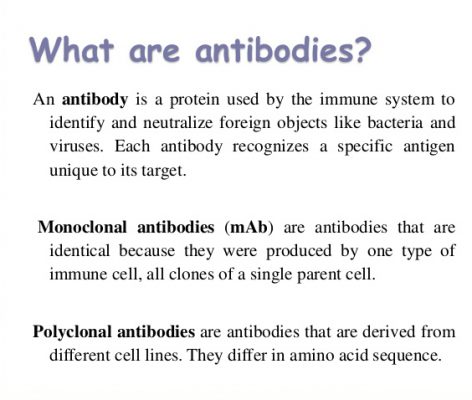 Monoclonal antibodies
READ MORE - https://www.technologynetworks.com/diagnostics/articles/antibody-vs-antigen-testing-for-covid-19-336486
How useful are they in treating COVID-19 patients?
- Central Consumer Protection Authority –
- The Act includes establishment of the Central Consumer Protection Authority (CCPA) to promote, protect and enforce the rights of consumers.
- The CCPA will be empowered to conduct investigations into violations of consumer rights and institute complaints/prosecution, order recall of unsafe goods and services, order discontinuance of unfair trade practices and misleading advertisements, impose penalties on manufacturers/endorsers/publishers of misleading advertisements.
- E-Commerce rules –
- The rules for prevention of unfair trade practice by e-commerce platforms will also be covered under this Act.
- Under this act every e-commerce entity is required to provide information relating to return, refund, exchange, warranty and guarantee, delivery and shipment, modes of payment, grievance redressal mechanism, payment methods, security of payment methods, charge-back options, etc. including country of origin which are necessary for enabling the consumer to make an informed decision at the pre-purchase stage on its platform.
- e-commerce platforms have to acknowledge the receipt of any consumer complaint within forty-eight hours and redress the complaint within one month from the date of receipt under this Act.
- The New Act introduces the concept of product liability and brings within its scope, the product manufacturer, product service provider and product seller, for any claim for compensation.
- Dispute Resolution –
- The new Act provides for simplifying the consumer dispute adjudication process in the consumer commissions, which include, among others, empowerment of the State and District Commissions to review their own orders, enabling a consumer to file complaints electronically and file complaints in consumer Commissions that have jurisdiction over the place of his residence, videoconferencing for hearing and deemed admissibility of complaints if the question of admissibility is not decided within the specified period of 21 days.
- An Alternate Dispute Resolution mechanism of Mediation has been provided in the new Act. This will simplify the adjudication process. A complaint will be referred by a Consumer Commission for mediation, wherever scope for early settlement exists and parties agree for it. Mediation will be held in the Mediation Cells to be established under the aegis of the Consumer Commissions. There will be no appeal against settlement through mediation.
- As per the Consumer Disputes Redressal Commission Rules, there will be no fee for filing cases upto Rs. 5 lakh. There are provisions for filing complaints electronically, credit of amount due to unidentifiable consumers to Consumer Welfare Fund (CWF). The State Commissions will furnish information to Central Government on a quarterly basis on vacancies, disposal, pendency of cases and other matters.
- Penal provisions –
- The New Act also introduces the concept of product liability and brings within its scope, the product manufacturer, product service provider and product seller, for any claim for compensation.
- The Act provides for punishment by a competent court for manufacture or sale of adulterant/spurious goods. The court may, in case of first conviction, suspend any licence issued to the person for a period of up to two years, and in case of second or subsequent conviction, cancel the licence.
- Under this new Act, besides general rules, there are Central Consumer Protection Council Rules, Consumer Disputes Redressal Commission Rules, Appointment of President & Members in State/District Commission Rules, Mediation Rules, Model Rules and E-Commerce Rules and Consumer Commission Procedure Regulations, Mediation Regulations and Administrative control over State Commission & District Commission Regulations.
- District CDRC – Entertain complaints where value of goods and services does not exceed Rs 1 crore. State CDRC – Entertain complaints where the value is more than Rs 1 crore but does not exceed Rs 10 crore. National CDRC – Entertain complaints where the value exceeds Rs 10 crore. One major change from the 2018 bill is that the new bill does not insist on having at least 50% of the commission to be from judicial background.
- The Central Consumer Protection Council Rules are provided for constitution of the Central Consumer Protection Council, an advisory body on consumer issues, headed by the Union Minister of Consumer Affairs, Food and Public Distribution with the Minister of State as Vice Chairperson and 34 other members from different fields. The Council, which has a three-year tenure, will have Minister-in-charge of consumer affairs from two States from each region- North, South, East, West, and NER.
- The objects of the Councils, as per the Act, shall be to promote and protect the rights of the consumers such as:
- The right to be protectedagainst the marketing of goods and services which are hazardous to life and property
- The right to be informedabout the quality, quantity, potency, purity, standard and price of goods or services, as the case may be so as to protect the consumer against unfair trade practices;
- Theright to be assured, wherever possible, access to a variety of goods and services at competitive prices;
- The right to be heardand to be assured that consumer’s interests will receive due consideration at appropriate forums
- The right to seek redressal against unfair trade practices or restrictive trade practices or unscrupulous exploitation of consumers and
- The right to consumer education.
- Mega Food Park is a scheme of the Ministry of Food Processing with the aim of establishing a “direct linkage from farm to processing and then to consumer markets” (A2C) through a network of collection centres and primary processing centres.
- The food parks aims to ensure maximising value addition, minimising wastage, increasing farmers‘ income and creating employment opportunities particularly in rural sector.
- It is based on “Cluster” approach and envisages a well-defined processing zone containing state-of-the art processing facilities with support infrastructure and well-established supply chain.
- Pattern of Assistance –
- In General areas– One time capital grant of 50% of the project cost subject to a maximum of Rs.50 crore.
- In Hilly & Difficult terrain– Capital grant of 75% of the project cost subject to a maximum of Rs. 50 crore.
- According to NASA, “Potentially Hazardous Asteroids (PHAs) are currently defined based on parameters that measure the asteroid’s potential to make threatening close approaches to the Earth. Specifically, all asteroids with a minimum orbit intersection distance (MOID) of 0.05 au or less are considered PHAs.”
- NASA classifies objects like these as ‘near-Earth objects’ (NEOs) as they get nudged by other planets’ gravitational attraction resulting in their proximity to our solar system.
- Even so, it is not necessary that asteroids classified as PHAs will impact the Earth. It only means there is a possibility for such a threat.
- According to the Centre for Near Earth Object Studies of NASA, NEOs are comets and asteroids nudged by the gravitational attraction of nearby planets into orbits which allows them to enter the Earth’s neighbourhood.
- These objects are composed mostly of water ice with embedded dust particles, and occasionally approach close to the Earth as they orbit the Sun.
- NASA’s Centre for Near-Earth Object Study (CNEOS) determines the times and distances of these objects as and when their approach to the Earth is close.
Monoclonal antibodies
- Monoclonal antibodies are proteins cloned in the lab to mimic antibodies produced by the immune system to counter an infection. They have their genesis in serum, the colourless constituent of blood that contains antibodies.
- These proteins bind to an antigen, the fragment of an infectious virus in the case of SARS-CoV-2, and either destroy it or block its action.
- In the case of COVID-19, there are yet no proven drugs to treat moderate or severe manifestations of the disease. Among the therapies being tested is convalescent plasma, which is a constituent of blood and recovered from those who have successfully fought the disease. This blood contains antibodies produced within a week or two of being infected.
- While plasma therapy involves injecting this entire antibody-soup into another sick patient, a monoclonal antibody can be made by isolating specific antibodies and multiplying them via various techniques.
Characteristics |
Antigen |
Antibody |
| Molecule Type | Usually, proteins may also be polysaccharides, lipids or nucleic acids. | Proteins |
| Definition | These are substances that provoke an immune response. | These are Glycoproteins that are secreted by immune cells (plasma cells) in response to a foreign substance (antigen). |
| Effect | Cause disease or allergic reactions. | Protect the system by lysis of antigenic material. |
| Origin | Within the body or externally. | Within the body. |
| Parts | Highly variable with different structural conformations and is usually composed of different epitopes. | Composed of three main parts: -Two light chains -Two heavy chains -Four polypeptides |
| Prevalence | Exists in all types of cells; mostly found in viruses, bacteria, and fungi. | Only present in some types of cells. |
| Synonyms | Immunogens | Immunoglobulins |
| Specific binding site | Epitope | Paratope |
| Complexity | Medium; exists due to random mutations in the cell’s gene. | Very High; Complex chemical that bonds to a very specific Antigen. |
| Source | Usually from a foreign substance (viruses, and bacterial and fungal toxins). | Naturally produced by the body (B lymphocytes or B cells). |
| Kinds | There are three basic kinds of antigens (Exogenous, Endogenous, and Autoantigens) | There are five basic kinds of antibodies (IgG, IgM, IgA, IgE, and IgD). |
| Examples | Exogenous antigens: bacteria, viruses, fungi, etc. Endogenous antigens: Blood group antigens, HLA (Histocompatibility Leukocyte antigens), etc. Autoantigens:Nucleoproteins, Nucleic acids, etc. | Breast milk, tears, saliva, sweat, and mucus. |
- Experts are not sure why, but have observed that many who died were victims of a cytokine storm — when the immune system goes into overdrive to flush out the virus. Pro-inflammatory cytokines recruit a host of specialised immune system cells to neutralise antigens.
- However, these cytokines can aggravate inflammation and injury in lung cells as well as in several other organs. A challenge in treatment is how to prevent this over-reaction. One method is to use antibodies that can block a particular protein, called CD6. They are found on the surface of T-cells, a class of cells that are a central prong in the body’s defence system.
- Experts say if this CD-6 is suppressed, it will prevent the T-cells from releasing a cytokine cascade and thus better regulate the immune system. There is also a lot of research going on in using such antibodies to prevent the replication of the virus.
- Since last month there have been reports from laboratories from nearly everywhere, reporting the presence of one or more antibodies that could be used to block the ‘spike’ protein, the key the coronavirus uses to infiltrate lung cells and proliferate.
- Before monoclonal antibodies were roped into discussions surrounding COVID-19, research has focused on deriving the right kind of antibodies that specifically bind onto regions of interest. These underpin the design of cancer therapies or fixes for autoimmune diseases.
Posted on 21-07-2020 • By Admin