




World Economic Outlook January 2021
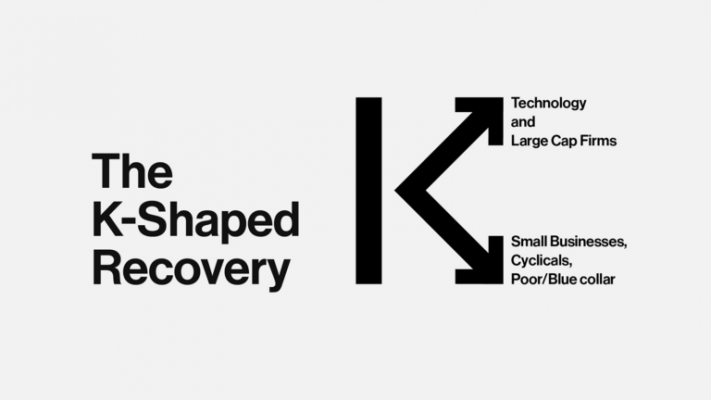 K-SHAPED RECOVERY
Summing up
Centre plans ‘green tax’ for older vehicles
Plastic burning main reason behind visibility reduction over Delhi: IIT Madras study
- Recently, the International Monetary Fund (IMF) has issued the World Economic Outlook Update.
- According to the IMF, multiple vaccines currently being rolled out around the world raised the prospect of an eventual end to the coronavirus pandemic in 2021.
- Like 2020, 2021 economic outlook is still closely related to COVID-19, which is still the only factor driving everything at this point.
- BAD NEWS: The strength of the projected recovery varies across countries, "depending on the severity of the health crisis, the extent of domestic disruptions to activity (related to the structure of the economy and its reliance on contact-intensive sectors), the exposure to cross-border spillovers, and effectiveness of policy support to limit persistent damage."
- The pandemic-induced acceleration in inequality by reiterating that close to 90 million people are likely to fall below the extreme poverty threshold during 2020-21
K-SHAPED RECOVERY
- The global economy is projected to grow 5.5% in 2021 and 4.2% in 2022.
- For the Emerging Market and Developing Economies category, Asian economies are projected to do much better – at 8.3 percent overall, leading by India (11.5 percent) and China (8.1 percent), compared with Sub-Sahara Africa at only 3.2 percent.
- China stands out as the only major economy in the world that booked a positive GDP growth figure at 2.3 percent in 2020. The IMF's forecast for China is 8.1 percent in 2021 and 5.6 percent in 2022.
- IMF has estimated that India’s Gross Domestic Product (GDP) will grow by 11.5% in the Financial Year (FY) 2021-22 , 2.7% higher than the projection made in October, 2020. In FY 2022-23, the economy will likely grow 6.8%.
- This revision for the current fiscal is higher than the government’s first advance estimate of 7.7% and also the RBI’s estimate of 7.5%.
- This great divergence in growth in the aftermath of a major pandemic has historic precedents, and the economics academic across the world termed it as the K-shaped recovery, valid across different social strata within the same country.
| Misallocation of stimulus funds or emergency subsidies makes some areas of the economy recover fast but leaves out others. In economics, this is known as The Cantillion Effect, which refers to the change in relative prices resulting from a change in the money supply. When liquidity is injected into the market, there are distributional consequences that operate through the price system. Prices act as viable signals, as relative price changes occur because the change in money supply has a specific injection point, and therefore a specific flow-path through the economy. If the injected liquidity or subsidies go toward specific industries or market players, it leads to greater inequality, dips in demand curves, and increasing levels of unemployment and private debt. As unemployment and private debt levels increase, so do defaults. And if the institutions that issue the debt are “too big to fail,” then the defaults they incur result in government bailouts, effectively converting private debt into public debt. If we look at changes in employment levels and prices since the beginning of the pandemic, we start seeing the manifestation of the K shape. |
- Updated version of the World Economic Outlook Report has painted a bright and promising economic prospect for 2021, especially for India.
- It would be natural and reasonable to be confident about the robust growth of India's economy, and to believe in the positive impact it has on global economic performance.
- A study, titled ‘The Association Between Ambient PM 2.5 Exposure and Anaemia Outcomes Among Children Under Five Years of Age in India’, published in the journal Environmental Epidemiology, conducted by IIT-Delhi has found that extended periods of exposure to PM 2.5 can lead to anaemia among children under the age of 5 years.
- The study has found that for every 10 micrograms per meter cube increase in PM2.5 levels exposure, there is a decrease of 0.07 grams per dL in average haemoglobin levels.
- This is the first study to have been carried out in India, where an association between exposure to PM 2.5 and anaemia in children under the age of 5 years in India has been examined and established, even as numerous other studies have looked at other detrimental health impacts of particulate matter.
- The study is important because so far anaemia has been looked at through the prism of nutrition deficiency, specifically that of iron.
- But even if government programmes like Poshan Abhiyan were strengthened, till air pollution is curtailed or exposure of children to PM 2.5 is brought down, anaemia is likely to continue to persist.
- Children with anaemia were on average slightly younger compared with children without anaemia, tended to be from lower wealth index levels, and had higher percentages of maternal anaemia.
- Studies linking anaemia to PM2.5 have been few and those that have been carried out have been mostly in the US, Europe and China.
- According to the India National Family and Health Survey 2015–2016 (NFHS-4), 53.1 percent of women in India with 15–49 years of age and 58.5 per cent of children under five were anaemic.
- The introduction of the National Iron Plus Initiative in 2011 sought to expand the beneficiaries of the National Nutritional Anaemia Prophylaxis Program to children with 6–59 months of age and although anaemia decreased by about 11 per cent between 2006 and 2016, it remains a major issue.
- According to the National Non-communicable Disease Monitoring Survey (NNMS), while two in five adults have three or more risk factors for non-communicable diseases (NCD) in India, the status of health system in responding to the disease burden is also underscored.
- NNMS, the largest comprehensive national Survey on risk factors and health systems preparedness of NCDs along with the framework on use of telemedicine for cancer, diabetes, heart diseases and stroke warned a ticking bomb to go off situation.
- The purpose of the survey was to collect reliable baseline data on key indicators (risk factors, select NCDs and health systems response) related to the National NCD monitoring framework and NCD Action Plan.
- This is the first of its kind of a comprehensive survey on NCDs using standardised tools and methods, covering the age groups of 15-69 years, males and females residing in urban and rural areas of the country.
- More than one in every four adults and 6.2% adolescents were overweight or obese; almost three out of ten adults had raised blood pressure and 9.3% had raised blood glucose.
- More than two in five adults and one in four adolescents were doing insufficient physical activity and their average daily intake of salt was 8 gms.
- One in every three adults and more than one-fourth proportion of men used any form of tobacco and consumed alcohol in past 12 months respectively.
- Telemedicine can bridge and link all these aspects. It can be adapted and used by medical practitioners from primary to tertiary health care level in India, through the national teleconsultation network and other similar platforms.
- This year the President has approved conferment of 119 Padma Awards including 1 duo case (in a duo case, the Award is counted as one) as per list below.
- The list comprises 7 Padma Vibhushan, 10 Padma Bhushan and 102 Padma Shri Awards.
- 29 of the awardees are women and the list also includes 10 persons from the category of Foreigners/NRI/PIO/OCI, 16 Posthumous awardees and 1 transgender awardee.
- Padma Awards - one of the highest civilian Awards of the country, are conferred in three categories, namely, Padma Vibhushan, Padma Bhushan and Padma Shri.
- The Awards are given in various disciplines/ fields of activities, viz.- art, social work, public affairs, science and engineering, trade and industry, medicine, literature and education, sports, civil service, etc.
- ‘Padma Vibhushan’ is awarded for exceptional and distinguished service; ‘Padma Bhushan’ for distinguished service of high order and ‘Padma Shri’ for distinguished service in any field.
- The awards are announced on the occasion of Republic Day every year.
- These awards are conferred by the President of India at ceremonial functions which are held at Rashtrapati Bhawan usually around March/ April every year.
|
Padma Bhushan (10) |
|
- The Centre plans to notify a system of imposing “green tax” on older vehicles in a move to disincentivise the use of polluting vehicles, and to curb pollution in the country.
- Union Road Transport and Highways Ministry has approved the proposal and the centre has sent it to the states for consultation after which it will be notified.
- Vehicles like strong hybrids, electric vehicles and those running on alternate fuels like CNG, ethanol and LPG will be exempted while the revenue collected through the green tax will be utilised for tackling pollution.
- Transport vehicles older than eight years could be charged green tax at the time of renewal of fitness certificate at the rate of 10 to 25 percent of road tax.
- Personal vehicles are proposed to be charged green tax at the time of renewal of registration certification after 15 years; public transport vehicles, such as city buses, will be charged lower green tax; higher green tax (50 percent of road tax) will be levied on vehicles being registered in highly polluted cities, the government statement said.
- Differential tax will also be charged depending on fuel (petrol/ diesel) and the type of vehicle.
- Apart from strong hybrids, electric vehicles and alternate fuels like CNG, ethanol, LPG etc, vehicles used in farming, such as tractor, harvesters and tillers will be exempted from the tax, the statement said.
- According to the ministry, the revenue collected from the green tax will be kept in a separate account and will be used for tackling pollution.
- Benefits of the green tax: It will dissuade people from using vehicles which damage the environment and motivate them to switch to newer, less polluting vehicles. Green tax will reduce the pollution level, and make the polluter pay for pollution.
- No-Benefits: Imposing additional tax on Public transport such as buses will transfer the burden on the public which is already suffering income losses post pandemic crisis. Green tax will contribute in increasing the overall transportation cost which could surge the overall inflation.
- The Dhannipur mosque project was formally launched on Republic Day 2021.
- The plot was allotted by the Uttar Pradesh government on the directions of the Supreme Court.
- The construction work of the much-awaited Dhannipur mosque project will finally begin in Ayodhya, Uttar Pradesh.
- A blueprint has been released by the Indo-Islamic Cultural Foundation (IICF), according to which, the mosque will be of the same size as that of the Babri Masjid, however, the shape of the structure will be very different from that of other mosques.
- Although the blueprint suggests a circular mosque with a unique minaret over it, project architect SM Akhtar hinted that it may be square-shaped like the Kaaba Sharif in Mecca, Saudi Arabia.
- According to a study by the Competition Commission of India (CCI), data privacy can take the form of non-price competition and abuse of dominance can lower privacy protection.
GDP to contract 8% in FY21, FICCI survey shows
- The study also made observations about other non-price factors such as quality of service (QoS), data speeds and bundled offerings, which are likely to be the new drivers of competitive rivalry between service providers in telecom sector in addition to just price.
- Much of the focus of the sector regulator, operators and consumers was on price and price-based competition.
- With the market moving towards data-based applications and services, there is a noticeable change in the demand for QoS.
- An aspect of data in the context of competition in digital communications market is the conflict between allowing access and protecting consumer privacy.
- Privacy can take the form of non-price competition. Abuse of dominance can take the form of lowering the privacy protection and therefore fall within the ambit of antitrust as low privacy standard implies lack of consumer welfare.
- On other non-price factors of competition, CCI found that consumers ranked network coverage at the top followed by customer service, tariff packaging and lower tariffs as the most important factors for the preference of a particular network.
- Lower data protection can also lead to the standard legal category of exclusionary behaviour which undermines the competitive process.
- According to the latest round of FICCI’s Economic Outlook Survey, India’s GDP is expected to contract by 8% in 2020-21.
- The annual median growth forecast by the industry body is based on responses from leading economists representing industry, banking and financial services sectors.
- The median growth forecast for agriculture and allied activities has been pegged at 3.5% for 2020-21.
- Agriculture sector has exhibited significant resilience in the face of the pandemic. Higher rabi acreage, good monsoons, higher reservoir levels and strong growth in tractor sales indicate continued buoyancy in the sector.
- Industry and services sector, which were most severely hit due to the pandemic induced economic fallout, are expected to contract by 10% and 9.2% respectively during 2020-21. The industrial recovery is gaining traction, but the growth is still not broad based.
- The consumption activity did spur during the festive season as a result of pent-up demand built during the lockdown but sustaining it is important going ahead.
- Some of the contact intensive service sectors like tourism, hospitality, entertainment, education, and health sector are yet to see normalcy.
- The quarterly median forecasts indicate GDP growth to contract by 1.3% in the third quarter of 2020-21. The growth is expected to be in the positive terrain by the fourth quarter with a projection of 0.5% growth.
- According to Reserve Bank data, overseas investment by domestic firms fell by over 42% to $1.45 billion in December 2020
- In 2020, companies in India had invested $2.51 billion in their foreign firms (joint ventures / wholly owned units).
- In November 2020, the total outward foreign direct investment (OFDI) was of $1.06 billion, down by 27% from a month earlier.
- Of the total FDI investment by the Indian companies during the month under review, $775.41 million was in the form of equity infusion and $382.91 million was in the form of loan.
- Investment of $287.63 million was in the form of issuance of guarantee..
| The outward FDI stock is the value of the resident investors' equity in and net loans to enterprises in foreign economies. The inward FDI stock is the value of foreign investors' equity in and net loans to enterprises resident in the reporting economy. |
- According to an international study led by researchers from the Indian Institute of Technology (IIT) Madras, Chloride-rich particles resulting from plastic burning may be primarily responsible for haze and fog formation in Northern India, including Delhi, during the winter months.
- The study, published in the journal Nature Geoscience, may help develop better policies to improve the air quality and visibility in North India.
- Many studies in the past have identified particulate matter or aerosol particles with diameter less than 2.5 micrometres (PM2.5) as a major pollutant, responsible for haze and fog formation over Indo-Gangetic plain, including Delhi.
- The new study found that chloride-rich particles were the highest inorganic fraction in particulate matter, primarily responsible for haze and fog formation in the region.
- Plastic-contained waste burning can emit highly toxic chemicals called ‘dioxins’, which can accumulate in food chain causing severe problems with reproduction and immune system.
- The Corporate Affairs Ministry has amended the rules for Corporate Social Responsibility (CSR) expenditure by India Inc to allow companies to undertake multi-year projects, and also require that all CSR implementing agencies be registered with the government.
- All companies with a net worth of Rs 500 crore or more, a turnover of Rs 1,000 crore or more, or net profit of Rs 5 crore or more, are required to spend 2 percent of their average profits of the previous three years on CSR activities every year.
- The amended CSR rules allow companies to set off CSR expenditure above the required 2 percent expenditure in any fiscal year against required expenditure for up to three financial years.
- There was ambiguity whether the rule would apply for expenditure undertaken prior to the amendment.
- A large number of companies conduct CSR expenditure through implementing agencies, but the new amendment restricts companies from authorising either a Section 8 company or a registered public charitable trust to conduct CSR projects on their behalf.
- A Section 8 company is a company registered with the purpose of promoting charitable causes, applies profits to promoting its objectives and is prohibited from distributing dividends to shareholders. Further, all such entities will have to be registered with the government by April 1.
- The change would impact CSR programmes of a number of large Indian companies that conduct projects through private trusts.
- The change would mean such private trusts would either have to be converted to registered public trusts, or stop acting as CSR implementing agencies “given that a sizeable amount of CSR is being contributed through their private trusts by many companies, including blue-chip companies.”
- The amended rules require that any corporation with a CSR obligation of Rs 10 crore or more for the three preceding financial years would be required to hire an independent agency to conduct impact assessment of all of their project with outlays of Rs 1 crore or more.
- Companies will be allowed to count 5 per cent of the CSR expenditure for the year up to Rs 50 lakh on impact assessment towards CSR expenditure.
- The Supreme Court stayed the Bombay High Court order that has freed a man of sexual assault charges under the Prevention of Children from Sexual Offences (POCSO) Act for groping a child, and instead convicted him under the Indian Penal Code (IPC) for a lesser offence.
- The allegation was not serious enough for the greater punishment prescribed under the law.
- The ruling, which drew criticism for its restricted interpretation of the offence, spotlights the concept of mandatory minimum sentencing in legislation, including POCSO.
- The court reasoned that since the offence under POCSO carried a higher punishment, a conviction would require a higher standard of proof, and allegations that were more serious.
- Section 7 of the Act says “Whoever, with sexual intent touches the vagina, penis, anus or breast of the child or makes the child touch the vagina, penis, anus or breast of such person or any other person or does any other act with sexual intent…”
- The court said that since the convict groped the prosecutrix over her clothes, this indirect contact would not constitute sexual assault.
- The court restrictively interpreted the lack of physical contact with sexual organs to mean that there was no physical contact.
- Section 8 of the POCSO Act carries a sentence of rigorous imprisonment of three to five years. However, imposing the minimum sentence is mandatory.
- Where a statute has prescribed a minimum sentence, courts do not have the discretion to pass lighter sentences irrespective of any specific circumstances that the case or the convict might present.
- Minimum sentences have been prescribed for all sexual offences under the POCSO Act barring the offence of sexual harassment.
- In a 2001 ruling, the Supreme Court held that where the mandate of the law is clear and unambiguous, the court has no option but to pass the sentence upon conviction as provided under the statute.
- A mandatory sentence is prescribed to underline the seriousness of the offence, and is often claimed to act as a deterrent to crime.
- Mandatory minimum sentences are also prescribed in some cases to remove the scope for arbitrariness by judges using their discretion.
- Studies have shown that mandatory sentencing in laws lead to fewer convictions, because when judges perceive that the punishment for the offence is harsh, they might prefer to acquit the accused instead.
- A 2016 report on the ‘Study on the Working of Special Courts under the POCSO Act in Delhi’ by the Centre for Child Law at the National Law School of India University, Bengaluru, has highlighted the reluctance of courts in convicting under sections that carry a mandatory minimum sentence.
- Mandatory sentences are counterproductive to the aim of reducing crime or acting as a deterrent. Instead of harsher punishment, legal experts recommend judicial reform that makes the sentencing process more accountable and transparent. This would include holding transparent proceedings for sentencing, recording specific reasons for punishment in rulings, etc.
- Fiscal deficit is the most important metric to understand the financial health of any government’s finances. As such, it is keenly watched by rating agencies — both inside and outside the country. That is why most governments want to restrict their fiscal deficit to a respectable number.
- One of the ways to do this is by resorting to “off-budget borrowings”. Such borrowings are a way for the Centre to finance its expenditures while keeping the debt off the books — so that it is not counted in the calculation of fiscal deficit.
- It is essentially the gap between what the central government spends and what it earns. In other words, it is the level of borrowings by the Union government.
- Off-budget borrowings are loans that are taken not by the Centre directly, but by another public institution which borrows on the directions of the central government. Such borrowings are used to fulfil the government’s expenditure needs.
- But since the liability of the loan is not formally on the Centre, the loan is not included in the national fiscal deficit. This helps keep the country’s fiscal deficit within acceptable limits.
- As a result, as a Comptroller and Auditor General report of 2019 points out, this route of financing puts major sources of funds outside the control of Parliament. “Such off-budget financing is not part of the calculation of the fiscal indicators despite fiscal implications”.
- The government can ask an implementing agency to raise the required funds from the market through loans or by issuing bonds.
- Other public sector undertakings have also borrowed for the government. For instance, public sector oil marketing companies were asked to pay for subsidised gas cylinders for Pradhan Mantri Ujjwala Yojana beneficiaries in the past.
- Public sector banks are also used to fund off-budget expenses. For example, loans from PSU banks were used to make up for the shortfall in the release of fertiliser subsidy.
- In addition to the borrowings by PSUs, the actual liabilities of the government would include loans taken for the recapitalisation of banks and capital expenditures of the Ministries of Railways and Power.
- Researchers at the Massachusetts Institute of Technology have constructed small molecules which when added with water form nanofibers.
- These hard and rigid molecules become so tough that they it can hold about 200 times their own weight.
- Researchers have decoded the microbial diversity in sourdough (a type of bread) and studied how microbes influence the aroma and fluffiness of the bread.
- By studying interactions between microbes in the sourdough microbiome that lead to cooperation and competition, one can better understand the interactions that occur between microbes more generally — and in more complex ecosystems.
- The obliquity of a planet is referred to as the angle between its equatorial plane and the orbital plane, i.e the tilt of a planet. During Saturn’s formation, its obliquity was 26.7°. But recent observations have shown that it has increased to 27°.
- Scientists say this tilt may have been caused due to its satellites, which are moving away much faster than what researchers had estimated before. The scientists predict that in the next few billion years, the inclination of Saturn's axis could more than double.
- The historicity and the date of ‘Ramayana’ remain a debatable subject among historians, archaeologists and scientists. Hence, the government has approved an underwater research project to ascertain the origins of the Ram Setu — a 48-km-long chain of shoals between India and Sri Lanka.
- Ram Setu’s age will be ascertained through the study of fossils and sedimentation to see if it correlates with the Ramayana period.
- Ram Setu, also known as Adam’s Bridge or Nala Setu, holds religious significance because of the Ramayana.
- The central advisory board on archaeology, which functions under the Archaeological Survey of India (ASI), has approved the proposal for this underwater exploration project.
- The study — to be conducted by the Council for Scientific and Industrial Research (CSIR) and National Institute of Oceanography (NIO) Goa — will focus on the process behind Ram Setu’s formation and also whether there are any submerged habitations around the structure.
- The agency’s research vessel named Sindhu Sadhana will be deployed to collect samples of sediment from 35-40 metres below the water level. Sindhu Sadhana is an indigenous exploration vessel which can stay underwater for up to 45 days.
- The proposed study will be based on archaeological antiquities, radiometric and thermoluminescence (TL) dating for geological timescale and other supporting environmental data.
- The Supreme Court appointed conservationist Nandita Hazarika as Member of a Technical Committee constituted by it on October 14, 2020 to hear complaints by land owners against the action taken by the Nilgris Collector, which included sealing of their buildings and allegations about the “arbitrary variance in acreage of the elephant corridor.”
- In 2011, the Madras HC upheld the validity of the Tamil Nadu government’s notification (of 2010) declaring an ‘Elephant Corridor’ in the Sigur Plateau of Nilgiris District.
- Government is fully empowered under the 'Project Elephant' of the Union government as well as Article 51 A(g) of the Constitution to notify the elephant corridor in the state’s Nilgiris district.
- The corridor is situated in the ecologically fragile Sigur plateau, which connects the Western and the Eastern Ghats and sustains elephant populations and their genetic diversity.
- It is situated near the Mudumalai National Park in the Nilgiris district.
- It has the Nilgiri Hills on its southwestern side and the Moyar River Valley on its north-eastern side. The elephants cross the plateau in search of food and water.
- There are about 100 elephant corridors in India of which almost 70% are used regularly.
- World Bank studies air pollution in three major cities — Delhi, Beijing and Mexico City.
- A study has found that the key to policy and behavior change to improve air quality depended on: high quality information to generate popular support for pollution mitigation; a strong incentive programme to ensure implementation of measures to curb pollution; and for institutions to work together to create air pollution management strategies.
- The study noted that while air pollution in a number of developing countries had reached a turning point, South Asian countries including India, Pakistan and Nepal were witnessing a rise in pollution intensity with economic growth.
- Delhi has consistently featured in the World Health Organization’s list of most polluted cities in the world over the past few years.
- The government has committed to reducing India’s emissions intensity by 33-35 percent from 2005 levels by 2030.
- Bihar, Delhi, Haryana, Jharkhand, Punjab, Uttar Pradesh, and West Bengal are witnessing the greatest increase in air pollution relative to growth in incomes according to the report.