
 EDITORIALS & ARTICLES
A polar vortex refers to an expanse of cold air that generally circles the Arctic region but occasionally shifts south from the North Pole. It is held in place by the Earth’s rotation and temperature differences between the Arctic and mid-latitudes.
In the Northern Hemisphere, it tends to be much farther north than the jet stream, a strong river of wind that separates Arctic air to the north and much warmer air to the south. While the jet stream is present year-round, the polar vortex only occurs in winter. The polar vortex usually does not have much impact on weather beyond the poles, but occasionally the polar vortex becomes disrupted: when the jet stream moves south, cold air from the polar vortex can plunge farther south as well.
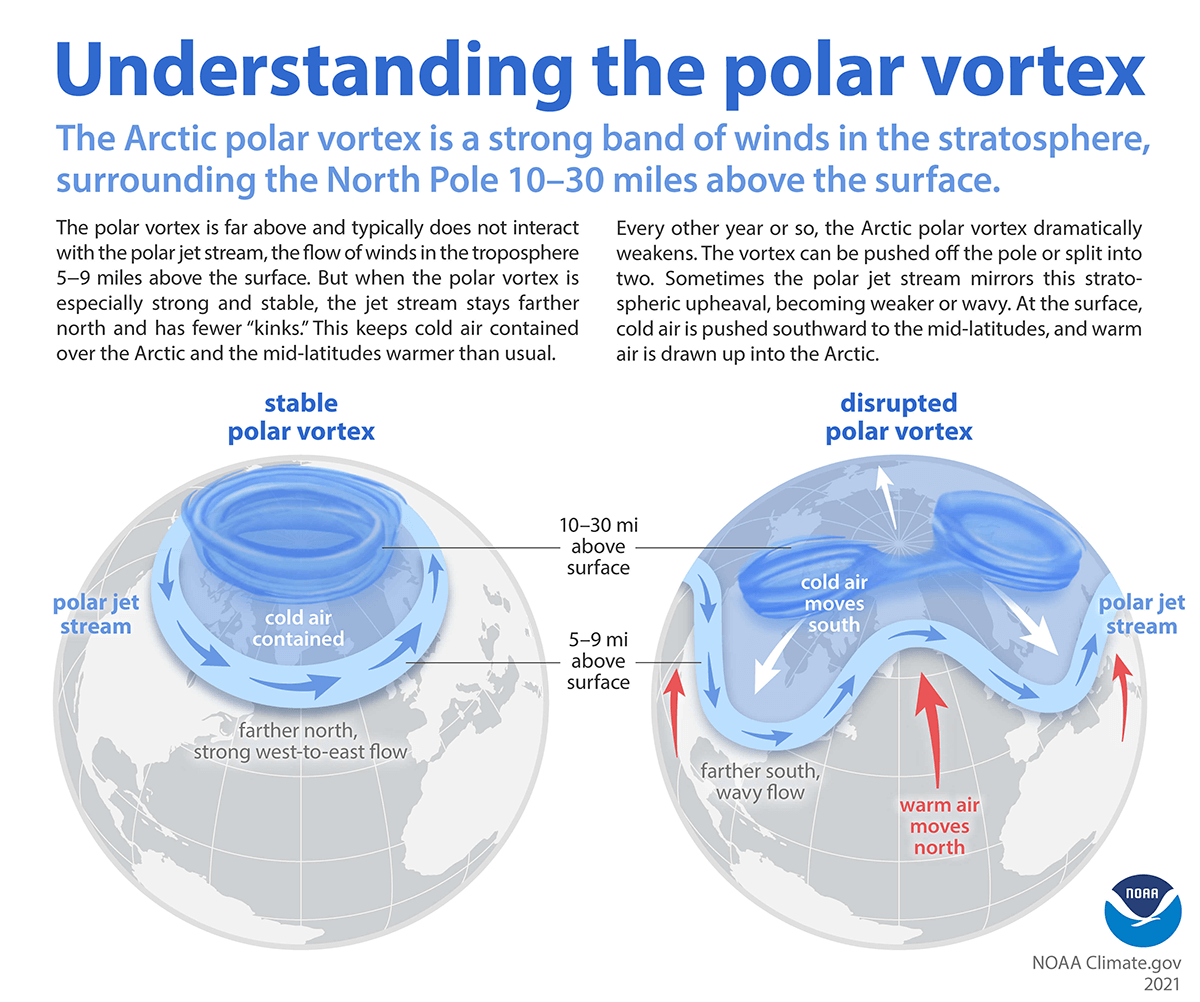
This shift happens naturally but now is expected to increase due to climate change:
However, there is still a lack of uncertainty about the exact impact of climate change on the intensity and severity of these changes.
A polar vortex this year in Asia has led to extreme winters. Thus such a shift can substantially impact Asia:
There is a need for more research on these phenomena and how global warming and climate change are about to impact their geographical spread, intensity, etc. This would lead to better climate adaptation strategies, particularly for the vulnerable sections of the global south. Such impacts should further be brought into global debates at the Conference of Parties to bring urgency for the shift towards better climate cooperation among all.
 General Studies Political Science and International Relations
IAS GOOGLE is googled by the team of Raja Sir’s Cracking IAS Academy. Sources include The Hindu, Indian Express, pib.nic.in, Down To Earth, Economic Times, Vigyan Prasar, AIR and the like. IAS GOOGLE has been prepared in pace with emerging UPSC Trends.




 Latest Latest Updates